
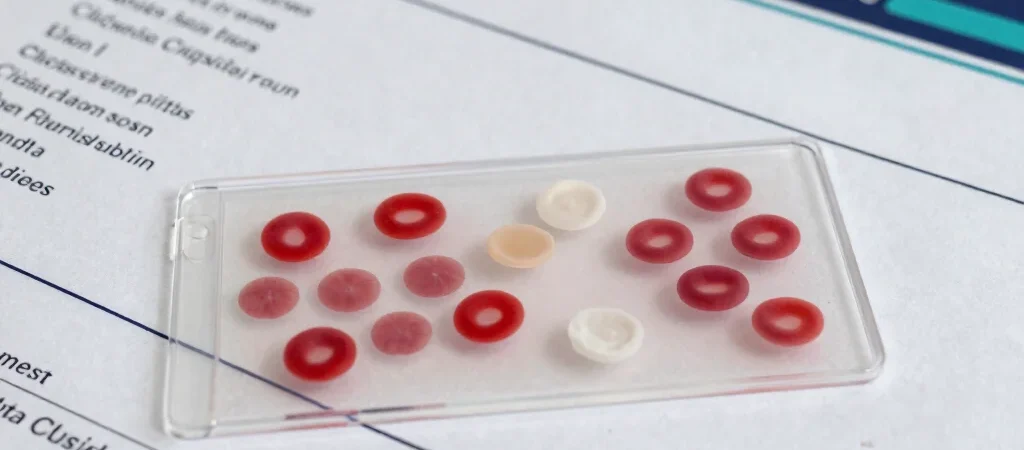
A complete blood count, or CBC, can arrive as a column of abbreviations and numbers. The panel is easier to understand when you sort those results into the kinds of blood cells they describe, rather than reading each value as a standalone answer.
Red Cells and Oxygen Transport
Red blood cell measurements include the number of cells and measures such as hemoglobin and hematocrit. Hemoglobin is the oxygen-carrying protein in red cells, while hematocrit describes the proportion of blood volume made up by red cells.
A CBC may also report red cell size and variation in size. These measurements offer different pieces of information; none alone explains why a result falls outside a laboratory's reference interval.
White Cells and Platelets
White blood cell counts describe the number of cells involved in immune defense. Some panels include a differential, which reports types of white cells separately and adds detail beyond the total count.
Platelets are cell fragments involved in blood clotting. Their count is one part of the panel, but it does not by itself describe every aspect of clotting function.
Read the Panel in Context
Reference intervals can differ by laboratory and may depend on factors such as age and other individual context. A result outside an interval is a prompt for interpretation, not a diagnosis by itself; clinicians consider the full panel, the reason it was ordered, and other relevant information. For learners, the most reliable first step is to identify which cell group a measurement describes before asking what it might mean.